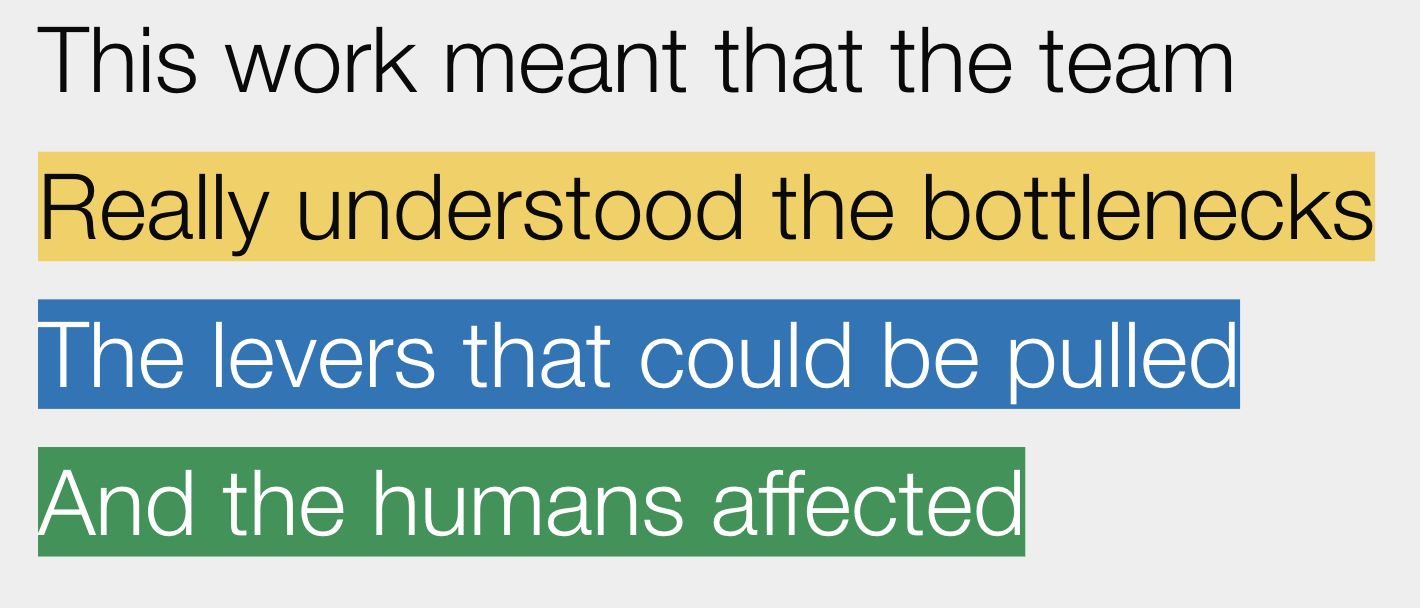
Slide saying: This work meant that the team / Really understood the bottlenecks / The levers that could be pulled / And the humans affected

Agile India 2023: Truly multi-disciplinary teams

We’re growing used to talking about the importance of autonomous, high performing teams, and of bringing different technical disciplines together. But most organisations are more than their technology, and delivering great services requires organisations’ operations, policy, strategy and other functions to pull in the same direction. Drawing on experiences of bringing together teams across a broad range of disciplines in the UK and globally, James Stewart will look at why now is the time to really think multi-disciplinary and what some of the foundations are for much more inclusive digital work.) ...
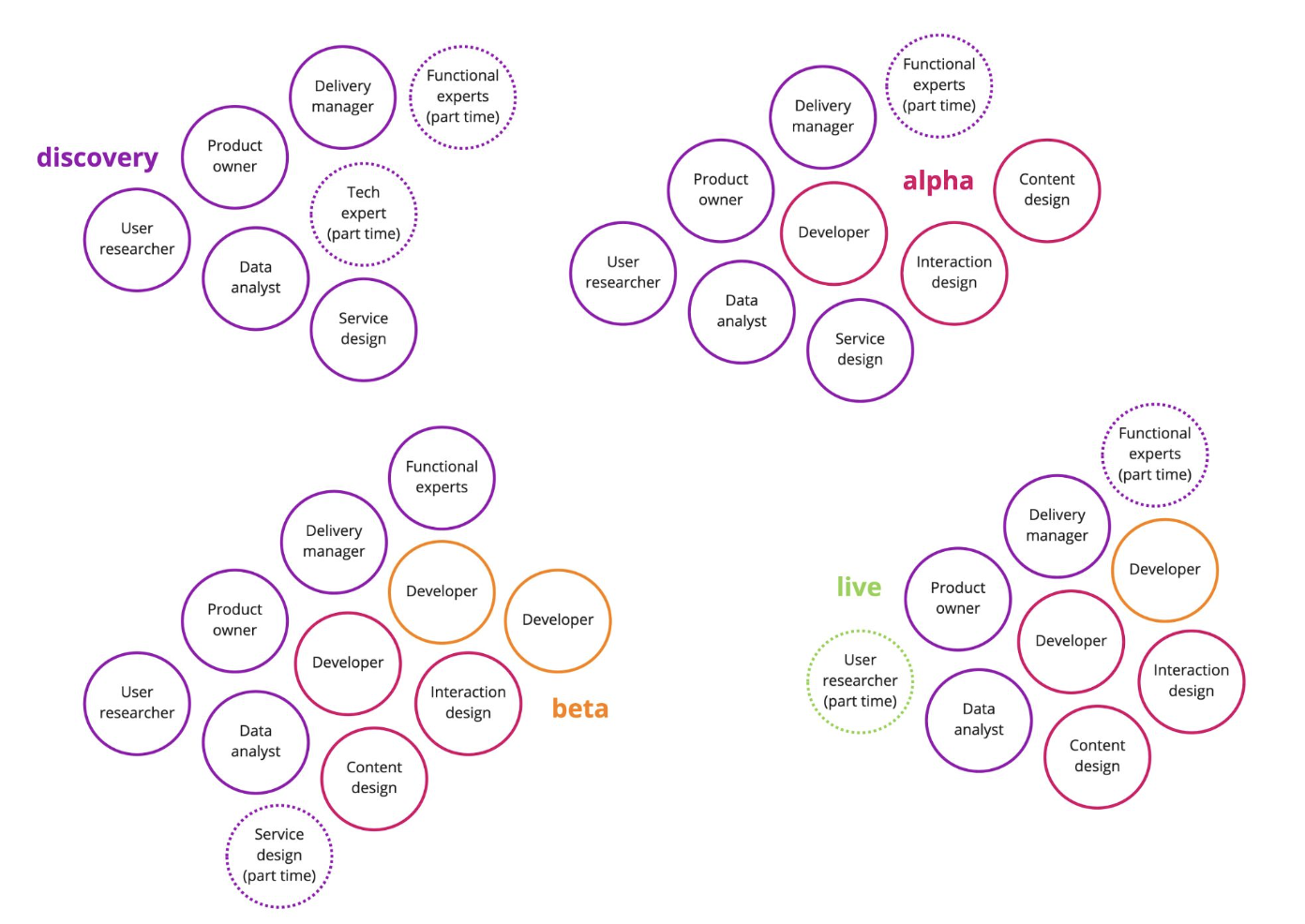

Image showing roles in digital service teams

Citizen First: Fixing digital funding in Government

I presented our paper on Fixing digital funding in government in a webinar for the Institute of Citizen Centric Services in Canada. I drew out parallels in other fields, but particularly focused on the transition that many digital teams are making from insurgents to establishment, with funding reform as the biggest bureaucratic hurdle.

Screenshot showing Emma, Alistair and James

FWDThinking: Open source in government

Emma Gawen and I joined FWD50’s Alistair Croll for a discussion of our report on creating conditions for success with open source in government. We touched on striking a balance between open and proprietary solutions; the leadership approaches needed for open source to thrive, and debunking some of the myths of “free” software. You can watch the session on the FWD50 website.

Slide asking 'what has covid taught you about how change happens?'

How leaders can give digital transformation the best chance of success

As part of the extended FWD50 programme, Emma Gawen and I ran an in depth look at how to de-risk an organization’s digital transformation. We looked at things like: Questions for non-technologists to ask about your tech Why you should start small, and scale what works Understand when to work with in house teams, suppliers or both Know what questions to ask of your digital transformation work to ensure it’s on track and meeting needs You can watch the session via Access FWD50

Image saying 'What so many teams have done is extraordinary. Let's make it ordinary'

Citizen First: Digital government now, and in the after times

Reflections on digital government during COVID and what that might mean for our collective future, for the Institute of Citizen Centric Servies in Canada. I presented a set of stories of incredible achievement, usually against the odds and against the norms of the systems those teams were working in. Digital teams work. Reset operating models around them. Legacy systems are brittle. And not just technology. Reform funding and incentives to unlock them. Data infrastructure is missing. Build the right service models so everyone wins. The things that have worked this year started as risky bets. Get comfortable placing informed bets. Sustained leadership engagement and clear focus remove friction. New governance and new leadership skills are still vital. These were in part drawn from some strategy work Dave Rogers and I had been doing for a Canadian client. ...

Screen grab from video of talk

Agile India 2018: Securing the Cloud

In addition to my keynote at Agile India 2018 I led a more focused session on cloud security as a precursor to my full day cloud security workshop. I focused the first part of the talk on understanding the change that cloud migration represents for many large organisations. I talked about status quo bias where risks of what we have today are never considered as serious as the risks of what’s new, even if the new ways of doing things creates new opportunities. A shift in technology requires a commitment to changing culture. ...

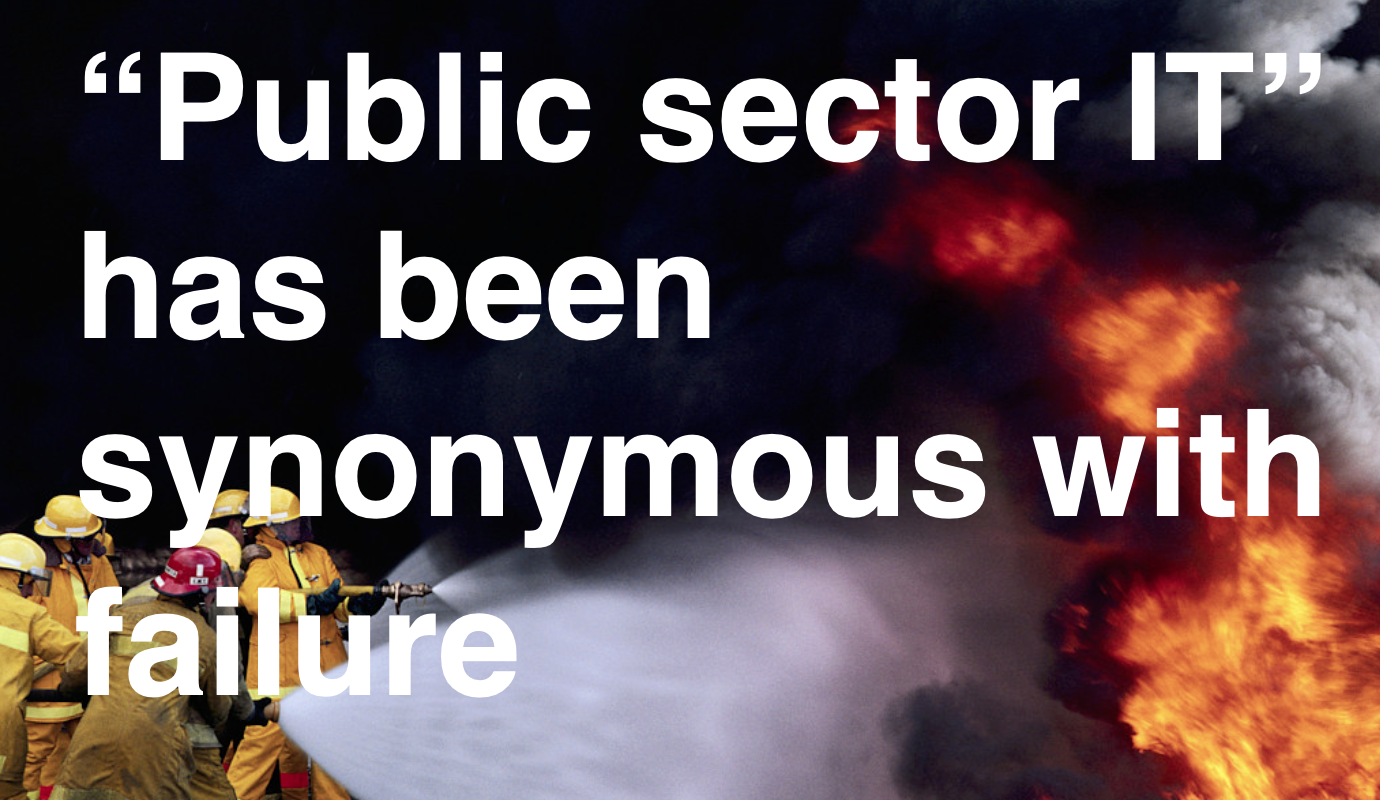
An image of flames with the caption '“Public sector IT” has been synonymous with failure'

Agile India 2018: Digital Transformation Decoded

Delivering a keynote for Agile India’s Digital Transformation day, I reprised my “Revolution NOT evolution: UK Government’s digital transformation journey” talk capturing my early reflections after leaving GDS. Starting with a potted history of the UK Government Digital Service, I drew out a set of reflections: Starting with a website let us get close to lots of users, really quickly Digital is a chance to reclaim values and history The problem is rarely tech / The solution is never (just) tech I particularly focused on the importance of groups of allies in driving transformation, calling out GDS’ predecessors and broad global network, but also stressing the importance of providing leadership to shape and direct what can otherwise be loose networks into powerful movements. ...

Post-it note on a window saying 'the internet is ok'

FWD50: Cyber-security and citizen resilience

The more we live online, the more vulnerable we are to asymmetric attacks and bad actors. Where once physical limitations kept us safe, the digital nature of the Internet lets attackers scale, adapt, and hide. What’s needed is more than awareness or vigilance—it’s antifragility. Resilience is the best defense a country can deploy, as this talk will explain. I shared a few stories and thoughts at the first FWD50 conference in Ottawa on what resilience looks like in practice, the importance of focusing on users and simplicity, and the vital role and unique opportunity governments have to improve matters. ...

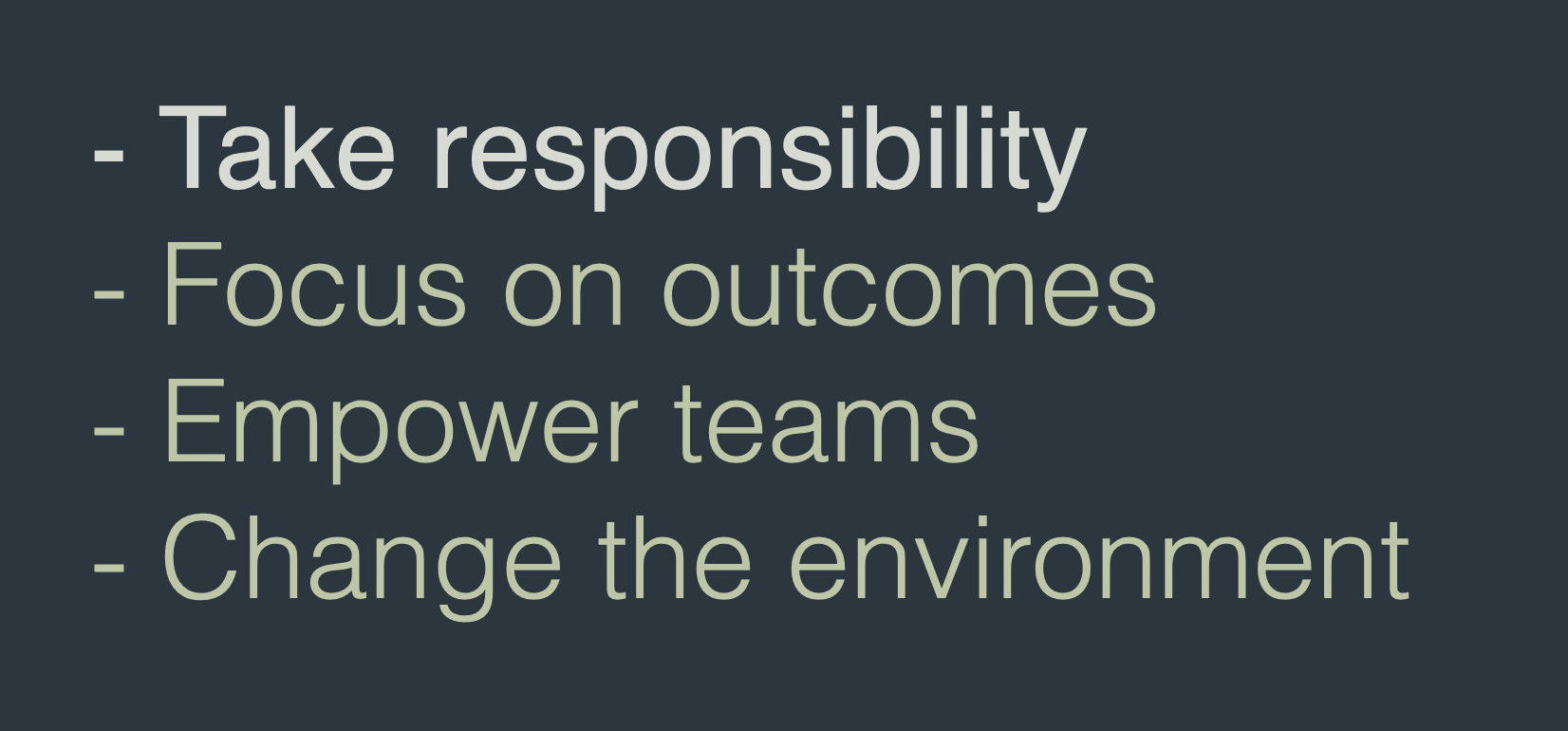
Slide showing four lessons for security leadership

FWD50: Moving to digital government: the security story

For the inaugural FWD50 conference in Ottawa, Canada, I was part of an expert group laying out the big picture of digital government. My presentation focused on security and leadership, drawing out four lessons: Take responsibility Focus on outcomes Empower teams Change the environment Find more on the FWD50 website.

A few thoughts from ITEM

A couple of weeks back I made my first visit to Ukraine, to keynote the (outdoor!) ITEM conference in Dnipro. It was one of those trips where you don’t really feel like you see the place. Due to flight troubles (the culmination of many frustrations with Ukrainian Airlines) I arrived at my hotel in Dnipro at 3am, and departed at 5.30 the next morning. That, combined with delivering two talks, hosting two Q&A sessions, being interviewed for two different video shows, and being on a panel meant the whole day is a bit hazy in my memory, but a few things stand out. ...