There are growing questions about how we ensure new digital infrastructure and the open source software that’s available to support it are adopted, financially sustained, and managed in a way that increases government agency.
The search for answers has drawn a lot of attention to the concept of Open Source Program Offices (OSPOs), a structure that’s been adopted in a number of technology-forward organisations over the past fifteen years.
An OSPO is a corporate entity that is responsible for managing and coordinating an organization’s open source activities. The OSPO can be seen as the central nervous system for an organization’s open source strategy, and it provides governance, oversight, and support for all things related to open source.
– Linux Foundation: A Deep Dive Into Open Source Program Offices
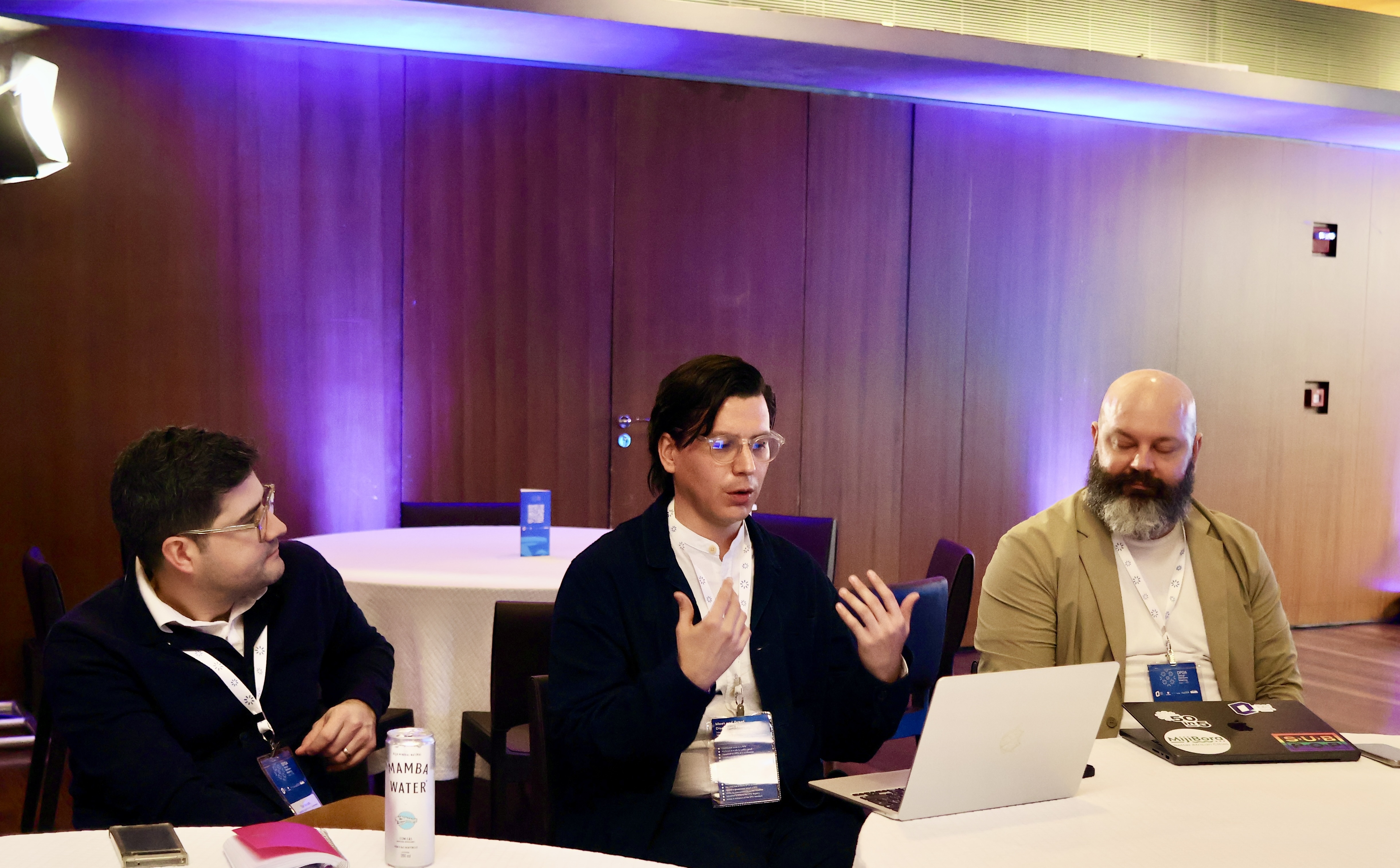
We convened a discussion of OSPOs at the 2025 Digital Public Goods Alliance Annual Members Meeting in Brasilia. Julia Vieira de Andrade Dias Emendabili, Dasun Hegoda and I introduced the discussion, but were very pleased to get wide ranging input from all the attendees thanks to the chairing of Kassim Vera.
My contribution
My role was to talk about sustaining OSPOs and I touched on a few points to get things going.
Sustainability starts with creating something people value so highly they cannot imagine doing without it. We need to ensure that we introduce OSPOs where they can make a positive impact and set them up for success before we think about sustaining them.
To be effective OSPOs need to think about: delivery and communication. They need to be able to demonstrate they have enabled change. And that may mean they take very different forms, or even identities.
They also need to be sensitive to changing needs and contexts. If our goal is transformation, we must accept that today’s organisational structures will inevitably become obsolete as we succeed.
The work of enabling government with open source (and other DPGs) can easily be diffuse, but having a central focal point provides a vehicle for a clearer strategy, with clear and manageable setting of expectations. But over time it’s the capabilities and the culture change that we want to sustain.
Those units also give you a place for building a different set of skills and often a different culture. Governments often don’t know how to talk to their local communities of skilled people. Often they don’t know where to start looking.
Earlier in the event Richard Gevers had referenced James Plunkett’s The Disciplines Theory of Government which talks about friction in the UK government between powerful established professional disciplines and the newer, digital disciplines. I referenced addressing that friction and shifting the balance as an example of the sort of work OSPOs might be part of. Making that shift is a substantial part of what “sustainability” looks like.
Bringing things back to the more immediate, I had three recommendations for the people in the room:
- For everyone: Work in the open. Talk honestly about what works and what doesn’t. Admitting failure is hard, but transparency is the only way to build the long-term constituencies needed to survive political cycles.
- For DPG owners: Advocate for your implementers. Be clear about what it takes to sustain your work at the local level. Don’t just celebrate the software; celebrate and advocate for the local teams who keep it running.
- For funders: Value the “How” as much as the “What”. Remember that the methodology of implementation is as critical as the tool itself. Invest in the organizational capabilities that make software successful, not just the codebase.
Reflections
For me, it was good to hear the pragmatism of the room. Despite significant collective time, money and credibility invested in specific open source related initiatives, there was a clear sense of common purpose in finding out how we could equip governments to find and sustain value, even where that means getting out of the way.
One of the most useful reminders was of the importance of local culture and politics in working out the appropriate timing, structure and mandate for an OSPO. In one place, the work of developing a formal structure may be a distraction while in another it’s what brings respect. There’s no one template, but there are lots of useful lessons.