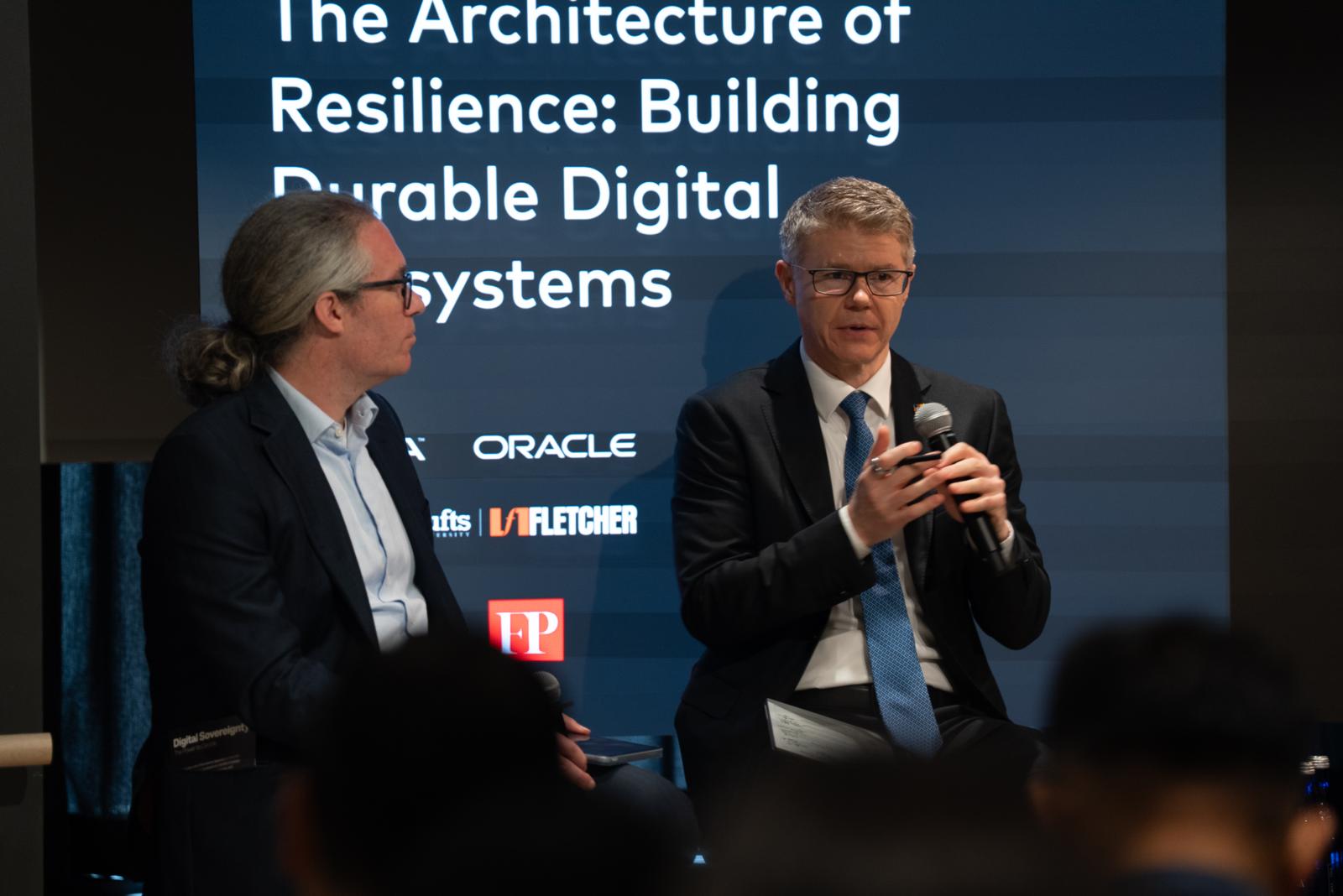
Just as digital sovereignty is about having the right agency and capacity to make and act on informed choices, digital resilience is a lot more than just whether the servers are working. It’s about whether you have the right options and ecosystem to keep delivering in the midst of changing conditions or emerging crises.
In the midst of a busy UN General Assembly week it was great to moderate a panel on digital resilience with Robert Opp CDO of UNDP, John Hallmark from EY, and Vittorio Di Bello from the International Finance Corporation/World Bank at Mastercard’s Digital Ambassadors Forum.
The premise for the panel was that:
As nations pursue greater digital independence, the question of how to build digital infrastructure that is both sovereign and resilient has become urgent. Countries emerging from conflict are rebuilding their digital systems from scratch, while others are making policy choices that will determine how durable their digital economies are in the face of future shocks. This panel brings together voices from multilateral development finance, the private sector, and continental institutions to examine the practical choices governments and their partners face: how to design digital ecosystems that withstand crisis, how to balance data sovereignty with interoperability, and how public-private collaboration can accelerate the construction of infrastructure that lasts.
Plenty to explore in that - 25 minutes flew by! In my framing I set out to outline that:
- The language of digital sovereignty has risen to prominence of late, but the idea is not new. The creation of agency and capacity through products, platforms, and protocols, but more importantly through teams and institutions has always been fundamental to the work we do at Public Digital.
- The decisions we make to navigate sovereignty and resilience are complex and deeply entwined with our future visions for our organisations. They require us to make priority calls and place the best informed bets we can.
- These topics have never been more urgent. The past few years have shown us how few of the certainties we’d established in the past 50 years can be relied on, but also the gravity of the decisions we’re making about how to rebuild after crises and conflicts, or how to respond to shifting geopolitics, the rise of AI and any number of other challenges.
- But at the same time, there is huge cause for optimism when we look at what even small steps in many countries have achieved. That chimed with many of the discussions earlier in the day.
Through the panel, we talked about creating the right societal and institutional structures, building cross-sector and cross-border ecosystems, making smart trade-offs and using innovative financing to make it all happen.
Rob spoke clearly to UNDP’s focus on whole of society resilience, not purely the digital systems, and Vittorio announced a new financial instrument through IFC that aims to build more resilient local business ecosystems. I’ll be keen to see how that financial instrument can be linked with government digital transformation investments, to diversify and improve governments’ own supply chains to add a multiplier to the economic gains.
Thanks to the Mastercard team for the invitation and the chance to talk about our new Public Digital book Digital Sovereignty: The Power to Decide