I’ve spent a lot of the past years in rooms where someone asks a version of the same question: how did we end up this dependent, and what can we actually do about it? The urgency of the question has grown as geopolitical certainties have slipped away and as AI has grown to dominate the conversation.
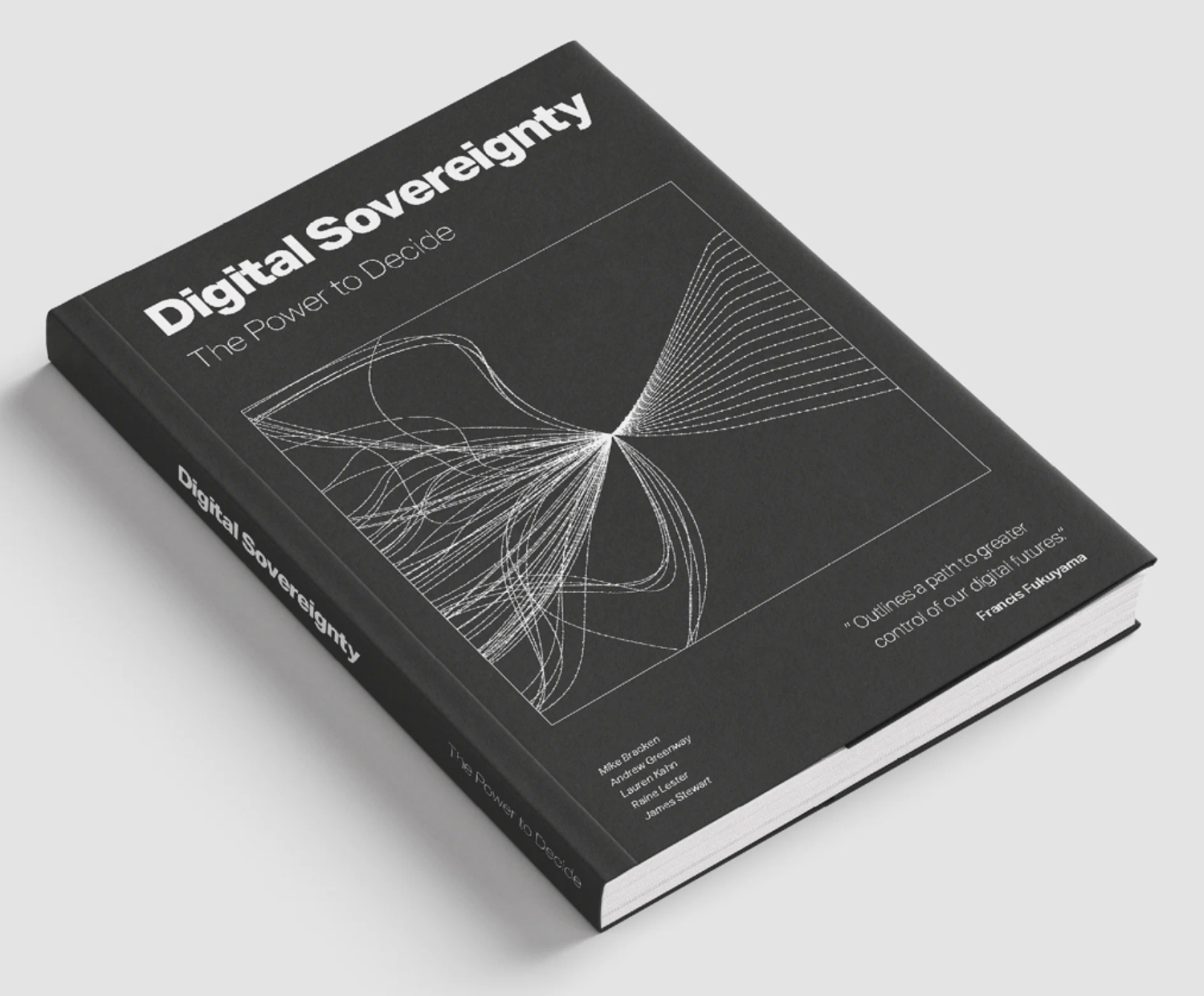
Now, with my Public Digital colleagues Mike Bracken, Andrew Greenway, Lauren Kahn and Raine Lester, I’ve helped write a book that tries to answer it. Digital Sovereignty: The Power to Decide is published by London Publishing Partnership.
What we mean by sovereignty
Digital sovereignty has become a crowded term. It gets used to mean data residency, to mean buying local, and sometimes to mean pulling up the drawbridge altogether. None of those is what we’re arguing for.
Our definition is simpler: digital sovereignty is the agency to make deliberate choices about your digital future, and the capacity to follow through on them. Agency without capacity is a strategy document nobody can act on. Capacity without agency is a team delivering someone else’s roadmap. You need both, and you need to keep investing in both, because neither stays still.
That framing has a useful consequence. Sovereignty isn’t a binary you either have or don’t, and it isn’t something you win once. It’s closer to a muscle — it strengthens with use and it atrophies when you stop.
Sovereignty is usually lost in small decisions
The headline debates are about cloud regions, chips and undersea cables. And lately they’re about Large Language Models and concentrations of power. But in my experience the agency that matters is rarely surrendered in a single dramatic decision. It goes in a procurement that quietly rules out future options, in a skills gap nobody fills, in a contract renewal that’s easier to sign than to question, in an architecture choice that made sense at the time and was never revisited.
I’ve been on both sides of that. I was part of the team that took the UK government into public cloud, and I’d still defend those decisions — they bought us faster delivery, better resilience and more modern security practices. What made them work was the foundation underneath: the skills to make nuanced architectural calls, and a commercial approach that kept decisions local and reversible. The lesson isn’t “cloud good” or “cloud bad”. It’s that the same decision can build agency or erode it depending on what you’ve built around it, and that you have to keep remembering why you chose what you chose.
Who it’s for
We wrote it for leaders who are past the diagnosis and want to do something — in government, in large organisations, and in the development and funding institutions that shape so many of these choices. It’s structured around the questions those leaders actually ask rather than around a theoretical framework, and it leans on what we’ve seen work in a lot of different countries, from UPI and Pix to GOV.UK Pay.
There’s plenty of cause for optimism in those examples. Small, well-chosen steps have taken a lot of countries a long way.
Where to find it
You can order it from the publisher, and there’s more about it on the Public Digital site.
Three endorsements we’re particularly glad of:
For countries facing urgent pressure to digitize, there’s a real challenge: how to move rapidly while ensuring digital infrastructure is governed for the public good. This book offers a vital path forward, showing how nations can pair open digital architecture with localized capacity to retain strategic control. A crucial read for public-sector leaders striving to build resilient digital systems for long term impact.
— CV Madhukar, CEO, co-develop
The central question in contemporary politics is: do we shape technology, or are we shaped by it? This book is a great guide for both thinking and doing.
— Kanishka Narayan MP, Minister for AI, UK
Digital Sovereignty takes note of the extreme dependence that both firms and individuals have developed on a handful of opaque and unaccountable technologies and companies, and outlines a path to greater control of our digital futures.
— Francis Fukuyama
I’ll keep writing here about the themes in the book, and about the conversations it starts. You can find everything I’ve tagged digital sovereignty in one place.